
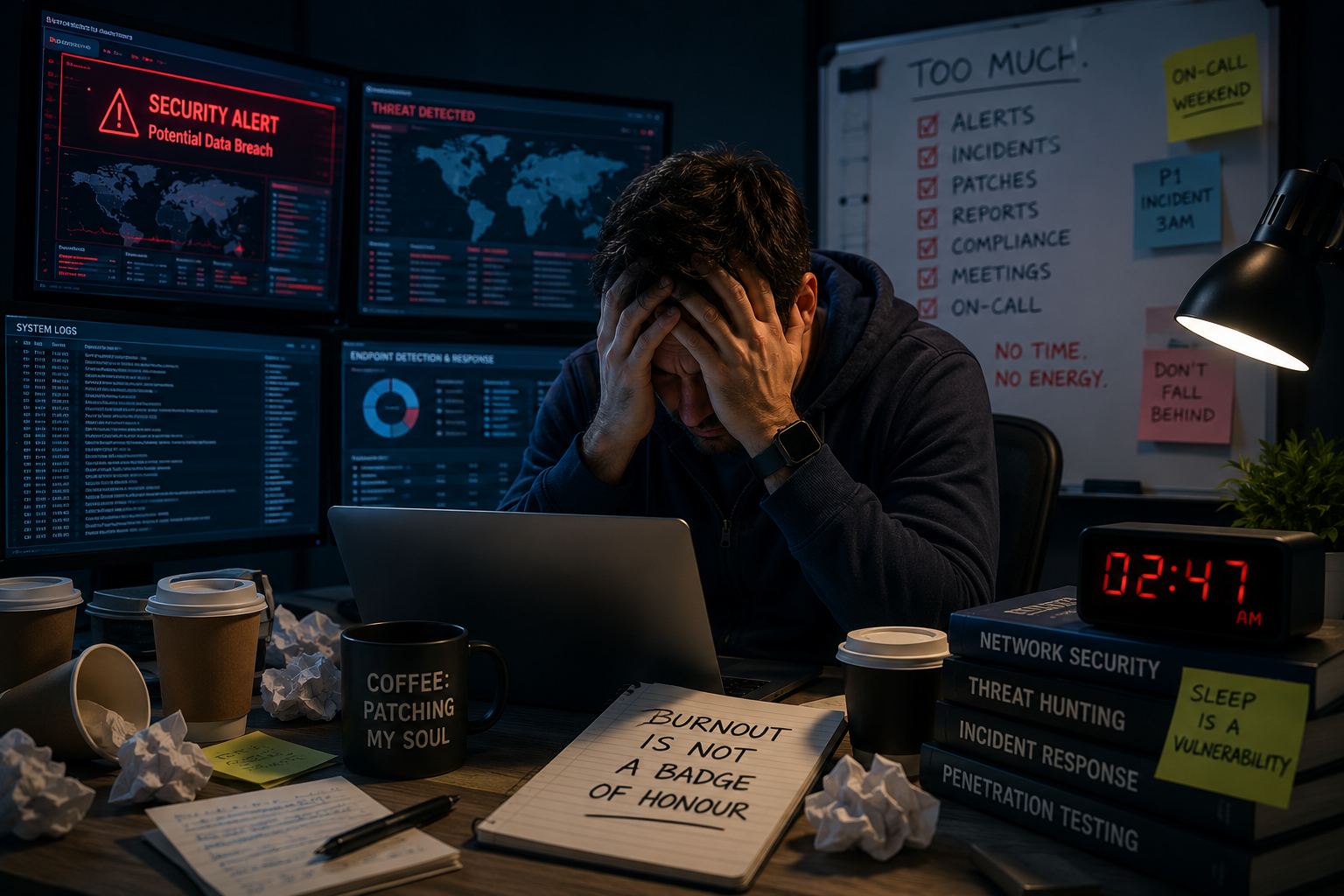
Cybersecurity professionals spend their days protecting organisations from threats, responding to incidents, and staying one step ahead of cybercriminals. Ironically, while they are experts at protecting businesses, many struggle to protect themselves from one of the biggest threats in the industry: burnout.
The cybersecurity sector is facing a growing challenge. Increasing workloads, constant pressure, evolving threats, and the expectation of being available around the clock are taking a serious toll on mental wellbeing. While technology continues to advance, human resilience has its limits.
Why Are Cybersecurity Professionals Burning Out?
Unlike many professions, cybersecurity rarely offers a true “switch off” period. Threat actors do not work 9-to-5, and security teams often feel responsible for preventing every possible breach.
Some of the most common causes of burnout include:
Constant Alert Fatigue
Security analysts can face hundreds or even thousands of alerts each day. Many turn out to be false positives, but every notification demands attention. Over time, this creates mental exhaustion and desensitisation.
High Levels of Responsibility
When a cyber incident occurs, security teams are often at the centre of the response. The pressure of knowing that a missed vulnerability or overlooked alert could lead to financial losses, reputational damage, or regulatory action can be overwhelming.
Long Hours and On-Call Duties
Many professionals find themselves checking emails late at night, responding to incidents during weekends, or carrying the stress of being permanently available.
Rapidly Changing Technology
Cybersecurity is one of the fastest-moving industries in the world. New vulnerabilities, attack techniques, regulations, and technologies emerge daily. The pressure to continuously learn can feel relentless.
The “Hero” Culture
Many security professionals pride themselves on solving problems and protecting others. While this dedication is admirable, it can sometimes lead to unhealthy behaviours where individuals sacrifice their own wellbeing to keep systems secure.
The Warning Signs of Burnout
Burnout rarely happens overnight. It often develops gradually and can be difficult to recognise in yourself.
Some common warning signs include:
- Feeling constantly tired, even after resting.
- Struggling to concentrate or make decisions.
- Becoming irritable or frustrated more easily.
- Losing motivation or enthusiasm for work.
- Difficulty switching off outside working hours.
- Increased anxiety around incidents and alerts.
- Physical symptoms such as headaches, poor sleep, or fatigue.
Recognising these signs early is crucial. Ignoring them can lead to reduced performance, health issues, and in some cases, leaving the profession entirely.
Finding Balance in a High-Pressure Industry
The good news is that burnout is not inevitable. Security professionals can build healthier habits that improve both performance and wellbeing.
Set Boundaries
Not every notification requires an immediate response. Establish clear boundaries between work and personal time wherever possible. If you’re off duty, allow yourself to be off duty.
Remember That Security Is a Team Sport
No single individual can prevent every attack. Effective cybersecurity depends on collaboration, shared responsibility, and well-defined processes. Trying to carry the weight of an organisation’s security alone is neither realistic nor sustainable.
Prioritise Recovery Time
Just as systems require maintenance windows, people need recovery periods. Regular breaks, annual leave, hobbies, exercise, and time with family are essential investments in long-term performance.
Focus on What You Can Control
Cyber threats will always exist. Rather than worrying about every possible scenario, focus on implementing sensible controls, improving visibility, and managing risk effectively.
Invest in Mental Health
Mental wellbeing should be treated with the same importance as physical health. Whether it’s speaking with a trusted colleague, accessing support services, or simply taking time to decompress, proactive mental health care matters.
Celebrate Successes
Cybersecurity teams often move from one problem to the next without recognising achievements. Take time to acknowledge improvements, successful projects, and incidents that were prevented.
A Message to Security Leaders
Leaders play a critical role in reducing burnout within their teams.
Creating a healthy cybersecurity culture means:
- Encouraging staff to take annual leave.
- Avoiding unrealistic expectations.
- Providing adequate staffing and resources.
- Promoting open discussions about mental health.
- Recognising achievements and contributions.
- Supporting professional development without overwhelming employees.
A burnt-out security team is a security risk. Healthy, motivated professionals are far more effective than exhausted ones.
Final Thoughts
Cybersecurity is an incredibly rewarding profession. It offers the opportunity to protect businesses, support communities, and make a genuine difference in an increasingly digital world.
However, protecting organisations should never come at the expense of protecting yourself.
The strongest security professionals are not the ones who work every hour of every day. They are the ones who find balance, maintain perspective, and build sustainable careers that allow them to perform at their best for years to come.
At Astley Digital, we believe that cybersecurity starts with people. Looking after your wellbeing is not a weakness. It’s one of the most important security controls you have.